Key takeaways
- Verify that your business is the domain's registered holder.
- Maintain company-controlled account recovery and renewal information.
- Use separate developer accounts and multifactor authentication.
- Clearly define managed hosting responsibilities.
- Keep reliable backups and understand website portability.
- Establish handover procedures before changing developers.
- Check domain transfer restrictions before moving registrars
You've hired a website developer, approved the design, and launched your business website. Everything looks good.
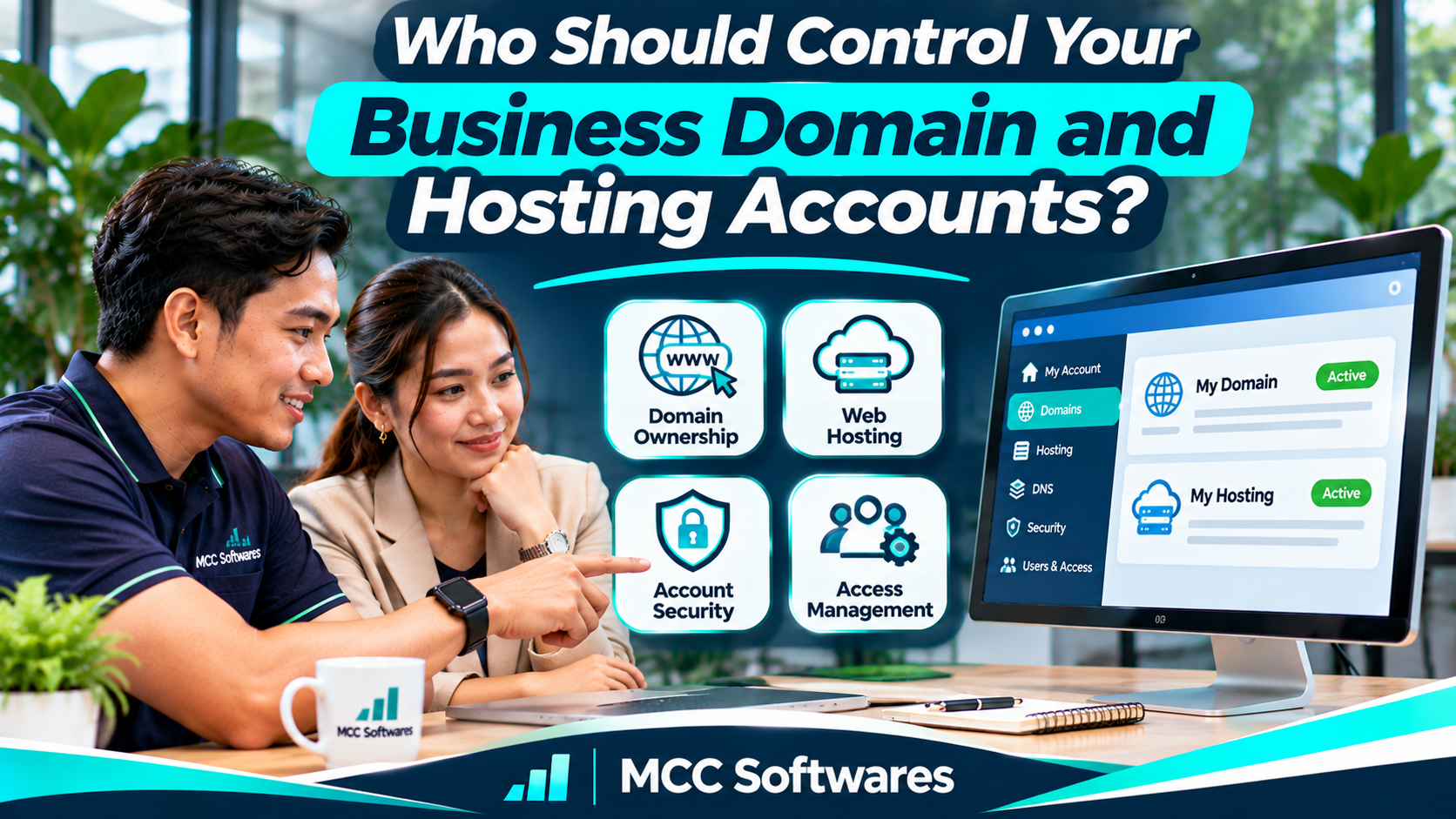
But there's one question worth asking: Who controls your business domain and hosting accounts?
Many Philippine business owners let their developers handle everything. It's convenient, especially when you're unfamiliar with domain registration and web hosting.
The problem starts when a developer becomes unreachable, a subscription expires, or you decide to change providers.
Your website may belong to your business, but do you actually have access to the accounts keeping it online?
Domain vs. Hosting: What's the Difference?
A domain is your website's address, such as yourbusiness.com.
Hosting is the service that stores your website files and makes them accessible to visitors.
They're two different services, even if you purchase both from the same company.
Your domain may also connect to your business email. That's why losing control of your domain can affect more than your website.
1. Your Business Should Be the Domain Registrant
Ideally, your business should be listed as the registered domain holder, with authorized company representatives managing the registrar account.
Why?
Because the registered holder has important rights and responsibilities involving the domain.
According to ICANN, paying for a domain doesn't automatically make you its registrant.
For example, a developer might register your domain using their personal information, even when you paid the registration fee.
What Should You Check?
Ask your developer:
Which registrar manages the domain?
Who is listed as the registered holder?
Which email receives renewal notices?
Who can change the domain's DNS settings?
Can your business request a domain transfer?
These details should be clear before the website launches.
2. Who Should Control Your Hosting Account?
For many small businesses, keeping the hosting subscription under a company-controlled account is a practical approach.
Your developer can still manage the technical setup through authorized access.
However, some businesses prefer managed hosting, where the developer handles the server, backups, updates, and maintenance.
That arrangement can work well.
The important thing is understanding what you're paying for and what happens if you stop using the service.
Questions to Ask About Hosting
Before signing an agreement, clarify who handles renewals, backups, technical support, security updates, and website recovery.
Also ask whether your website can be transferred to another hosting provider.
Some platforms have restrictions, so don't assume every website can be moved without additional work.
3. Avoid Giving Developers Your Main Account Password
You don't need to surrender complete account access just because someone maintains your website.
Whenever possible, create a separate account for your developer.
For example, they may need access to website files without needing permission to change billing details or transfer your domain.
Use strong passwords and enable multifactor authentication.
The Cybersecurity and Infrastructure Security Agency recommends multifactor authentication as an important way to protect online accounts.
Remember to remove access when someone no longer works on your website.
4. Keep Track of Renewals and Payments
Imagine waking up one morning and discovering your website isn't loading.
You contact your developer and learn that your hosting subscription expired.
This can happen when renewal reminders are sent only to the developer's email.
Maintain a simple record of your domain registrar, hosting provider, renewal dates, billing responsibilities, and authorized administrators.
Enable automatic renewals where appropriate, but check that the payment method remains valid.
It's also useful to have a backup administrator who can help recover accounts when the primary contact is unavailable.
5. Make Sure You Can Access Your Website Files and Backups
If you decide to move your website, what happens to your files and database?
This is something business owners often overlook.
Before hiring a developer, clarify whether you can request:
Website files and database backups
Content management system access
Domain and DNS configuration details
Documentation of third-party integrations
Relevant source code and licenses, where agreed
Not every website includes full source code ownership. Some systems use licensed components or proprietary platforms.
Your contract should explain what you'll receive and what you're allowed to transfer.
6. What Happens When You Change Developers?
Changing developers shouldn't automatically mean rebuilding your website.
However, moving to another provider requires planning.
For example, if your business email uses the same domain, changing DNS settings incorrectly could interrupt email delivery.
Before making changes, confirm that your website backups work and that the new hosting environment is ready.
You should also check whether your domain is eligible for transfer.
ICANN's domain transfer guidance explains that certain restrictions, including some 60-day transfer locks, may apply.
Don't cancel your existing services until the replacement setup has been tested.
7. What If Your Developer Already Controls Everything?
Start by requesting the account information.
Ask which registrar manages the domain, who is listed as the registrant, and where the website is hosted.
You can use ICANN Lookup to identify registration information for many domains, although some contact details may be hidden.
If your developer is unreachable, contact the registrar or hosting provider directly.
They may request documentation before discussing recovery options.
The process depends on the account details, registration agreement, and provider policies.
Include Domain and Hosting Control in Your Agreement
Before approving a website development proposal, make sure the agreement addresses domain registration, hosting responsibilities, administrator access, backups, and handover procedures.
At MCC Softwares, we develop websites and custom web applications for Philippine businesses and organizations.
Our web application development services help businesses plan practical digital solutions based on their requirements.
We also provide software maintenance and support, with service responsibilities established for each project.
If you're planning a website, read our guide to choosing a website developer in the Philippines before making your decision.
Frequently Asked Questions
Should my developer own my business domain?
Generally, your business should be the registered holder. A developer can assist with registration and technical management without being the registrant.
Can my business use developer-managed hosting?
Yes. Just make sure the agreement clearly explains access, billing, backups, maintenance, and website handover.
What happens if my developer disappears?
Contact your registrar and hosting provider to discuss account recovery. Your options depend on the registration details and available evidence.
Final Thoughts
Your website is an important part of your business, so you should understand who controls the accounts behind it.
You don't need to manage every technical detail yourself. That's what developers and hosting providers can help with.
But your business should retain appropriate access, clear contractual rights, and a reliable way to recover its website.
Let your developer manage the technology, but don't lose control of your business's online presence.
Questions this article answers
- Who should control your business domain and hosting accounts?
- Should a website developer register a domain under their own name?
- Can developers manage hosting without controlling the account?
- How should businesses protect website administrator access?
- What happens when domain or hosting subscriptions expire?
- Can a business transfer its website to another provider?
- What should businesses request during a developer handover?
Sources and references
- ICANN General Questions — ICANN
- Domain Registration Process — ICANN
- Domain Transfer FAQs — ICANN
- Secure Our World — CISA
- Software Maintenance and Support — MCC Softwares
Topics covered
Domain RegistrationICANNDomain RegistrarDNSWeb HostingCISAMultifactor AuthenticationMCC SoftwaresPhilippines
Related MCC products and services
Last reviewed for accuracy: 18 November 2026.
Related articles
-
What Should You Check in a Software Development Proposal?
Before hiring a software developer, learn what to check in a proposal, including project scope, development costs, timelines, source code ownership, security, testing, and ongoing support.
-
What Should a Business Website in Cotabato City Include?
Planning a website for your business in Cotabato City? Discover the essential pages, contact details, mobile-friendly features, and local SEO elements your website should have.
-
Website Development in Davao: A Business Owner’s Planning Guide
Planning a business website in Davao? Learn how to define your goals, compare proposals, budget for ongoing costs, and prepare for launch with clear ownership and support arrangements.
-
How to Choose a Website Developer in the Philippines
Choosing a website developer? Learn how to compare portfolios, proposals, costs, ownership, SEO, and ongoing support before hiring a developer for your Philippine business.
-
Affordable Custom Software Development in Cotabato City
Planning a custom system in Cotabato City? Learn how to compare proposals, prioritize features, budget for support, and explore MCC Softwares solutions for your organization.