Key takeaways
- Confirm the exact features and exclusions.
- Review the total project cost and recurring expenses.
- Check development milestones and payment terms.
- Agree on how additional features will be quoted.
- Clarify source code, data, and account ownership.
- Include appropriate security and privacy requirements.
- Define testing, acceptance, and post-launch support.
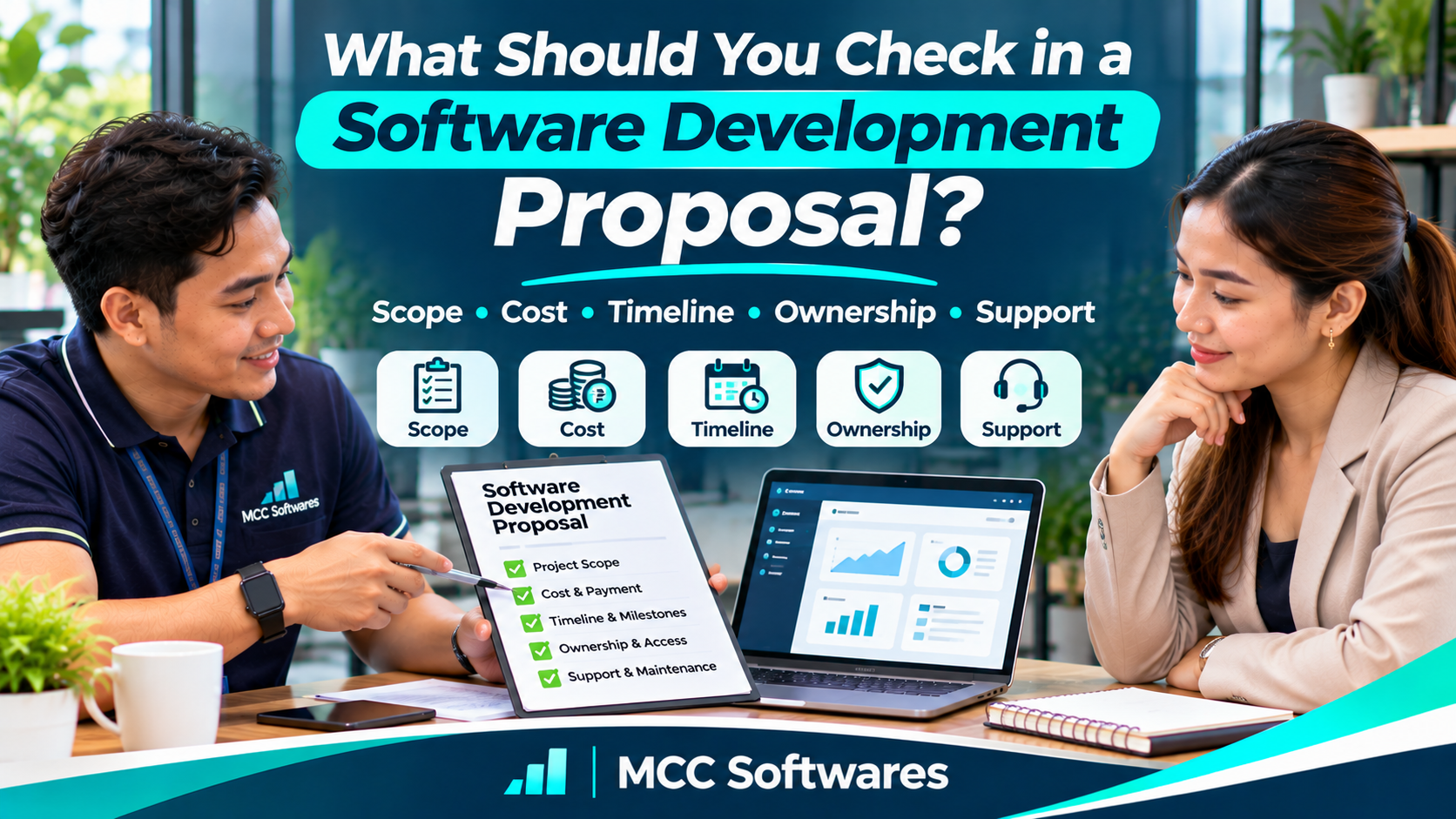
You've found a software developer, explained your requirements, and finally received a quotation.
The price looks reasonable, but before approving anything, take a closer look at the software development proposal.
Does it clearly explain what you're paying for? What happens if you request changes halfway through the project? And who will maintain the system once it's finished?
These questions matter whether you're building an inventory system, clinic application, or custom business platform in the Philippines.
Here's what to review before signing an agreement.
1. Check the Project Scope
The project scope explains exactly what the developer agrees to build.
For example, if you're requesting an inventory management system, the proposal shouldn't simply say "Inventory Module."
It should describe what the module actually does, such as product registration, stock receiving, inventory transfers, and reporting.
Look for What's Not Included
This is just as important as the feature list.
Does the quotation include data migration, mobile access, barcode scanning, or integration with existing software?
If these aren't mentioned, don't assume they're included.
A clear scope helps both parties understand what they're agreeing to deliver.
2. Review the Total Development Cost
A lower quotation isn't necessarily a better deal.
One developer might include testing, deployment, and training, while another may charge separately for those services.
Before comparing prices, check whether the proposal includes:
Development and design fees
Hosting and domain expenses
Third-party software licenses
Payment gateway or SMS integration costs
Data migration
Staff training
Maintenance and technical support
Applicable taxes
Ask whether the project has a fixed price or will be billed based on actual development time.
You should also understand when payments are due.
3. Understand the Timeline and Milestones
Be cautious of a proposal that promises a completion date without explaining how the project will progress.
A practical development schedule may include planning, interface design, development, testing, and deployment.
For example, a project could be divided into phases:
Phase 1: Requirements and system design
Phase 2: Core feature development
Phase 3: Testing and revisions
Phase 4: Deployment and staff training
Ask what deliverables you'll receive at each milestone and when you can review them.
Timelines should also account for your organization's responsibilities, including supplying information and approving designs.
4. Check How Changes Will Be Handled
Software requirements sometimes change during development.
You may initially request a simple sales system, then later decide to include multiple branches or customer loyalty features.
Will those changes cost extra?
A good proposal should explain how additional requests are evaluated, quoted, approved, and scheduled.
For significant changes, request written confirmation of the revised cost and timeline before development begins.
This protects both you and the developer from misunderstandings.
5. Clarify Source Code and Data Ownership
This is one detail business owners sometimes overlook.
Paying for custom software doesn't automatically answer every question about intellectual property, licensing, and source code access.
Ask whether you'll receive the source code, database documentation, administrator credentials, and other agreed deliverables.
What Happens if You Change Developers?
Consider whether another developer could maintain the system in the future.
Clarify who controls the hosting account, domain, database, and software repository.
Also distinguish ownership of your business data from ownership or licensing of the underlying software.
Put these arrangements in writing before signing.
6. Review Security and Data Privacy
If the system handles employee information, customer records, financial transactions, or patient data, security should be part of the project requirements.
Ask how the software will manage user permissions, backups, authentication, and unauthorized access.
Under the Philippine Data Privacy Act and its implementing rules, organizations have responsibilities for protecting personal information, including when processing is outsourced.
For projects involving personal data, clarify the developer's responsibilities, confidentiality obligations, and applicable data-processing agreements.
Security requirements should match the actual information your system handles.
7. Confirm Testing and Project Acceptance
How will you know the software is finished?
A proposal should explain how the system will be tested and what conditions must be met before final acceptance.
For example, if you're developing a POS system, testing might include completing a sale, applying discounts, adjusting inventory, and checking transaction reports.
Ask About User Acceptance Testing
User acceptance testing allows your employees to check whether the software supports the agreed business workflows.
Document any problems found during testing and clarify which defects must be corrected before approval.
Development milestones should be tied to identifiable deliverables, not just elapsed time.
For additional guidance, see this software development statement of work checklist.
8. Understand Maintenance and Technical Support
Software projects don't necessarily end on launch day.
Employees may need assistance, bugs may appear, and future updates may become necessary.
Before agreeing to the proposal, ask:
Is post-launch support included?
How long does the defect-fixing period last?
How are urgent problems reported?
Are future improvements charged separately?
Who handles hosting, backups, and updates?
The answers should be documented rather than relying on verbal promises.
9. Watch for Warning Signs
You don't need to be a programmer to recognize an unclear proposal.
Be cautious when a quotation contains vague features, unexplained costs, unrealistic guarantees, or no written process for changes.
Likewise, clarify proposals that don't explain source code rights, security responsibilities, testing, or what happens if the project is cancelled.
A professional-looking document isn't enough. The important terms should be understandable.
Custom Software Development by MCC Softwares
At MCC Softwares, we develop custom applications for businesses, healthcare providers, and government organizations in the Philippines.
Based in Cotabato City, our work includes business management systems, healthcare software, and digital government solutions.
Our custom software development services begin with understanding your workflows, users, and project requirements.
From there, the development scope can be planned around the features your organization actually needs.
If you're exploring a software project, you can contact MCC Softwares to discuss your requirements and request a project-specific proposal.
Frequently Asked Questions
Should I choose the cheapest software development proposal?
Not automatically. Compare the scope, included services, deliverables, support, and total cost before deciding.
Should I receive the source code after development?
That depends on your contract. If source code delivery or ownership is important, make sure the agreement addresses it explicitly.
Can I request changes after approving a proposal?
Usually, changes can be discussed, but additional work may affect cost and delivery schedules. Agree on a written change-request process.
Final Thoughts
A good software development proposal should explain more than the price.
It should give you a clear understanding of what will be built, how the project will progress, what you'll receive, and what happens after launch.
Before signing, ask questions about anything that seems unclear.
The right software development partner should help you understand your investment, not leave you guessing about what you're paying for.
Questions this article answers
- What should a software development proposal include?
- How do I compare software development quotations?
- What is project scope in software development?
- Who owns the source code after development?
- What happens when project requirements change?
- What testing should be completed before approval?
- Should maintenance and support be included?
- What are the warning signs of an unclear proposal?
Sources and references
- What Should Be Included in a Software Development Statement of Work? — Ortem Tech
- Software Development Statement of Work: What to Include — Coretus Technologies
- Implementing Rules and Regulations of the Data Privacy Act — National Privacy Commission
- Custom Software Development Philippines — MCC Softwares
Topics covered
Software Development ProposalStatement of WorkCustom Software DevelopmentMCC SoftwaresNational Privacy CommissionData Privacy Act of 2012User Acceptance TestingSource Code OwnershipPhilippinesCotabato City
Related MCC products and services
Last reviewed for accuracy: 15 November 2026.
Related articles
-
Do I Need a Business Website if I Already Have a Facebook Page?
Is a Facebook Page enough for your business? Learn when a website becomes worth the investment, how it helps customers find you on Google, and why using both can be a smarter approach.
-
How Much Does Custom Software Development Cost in the Philippines?
Planning to build custom software for your business? Explore published software development prices in the Philippines, the factors that affect your budget, and how to get an accurate quotation.
-
Website Development in Davao: A Business Owner’s Planning Guide
Planning a business website in Davao? Learn how to define your goals, compare proposals, budget for ongoing costs, and prepare for launch with clear ownership and support arrangements.
-
Custom Web Application Development for Small Businesses
Is custom web application development worth it for your small business? Compare ready-made software, total costs, potential benefits, and the questions to ask before hiring a developer.
-
Affordable Custom Software Development in Cotabato City
Planning a custom system in Cotabato City? Learn how to compare proposals, prioritize features, budget for support, and explore MCC Softwares solutions for your organization.