Key takeaways
- 1. Electronic records can make patient information easier for authorized staff to retrieve.
- 2. EMR systems support clinical documentation and continuity of care.
- 3. Health information is sensitive personal information under Philippine law.
- 4. Clinics should assess internet reliability, training, and data migration.
- 5. Government integration must be verified for each EMR product.
- 6. LUNAS EMR provides a digital medical record solution for clinics.
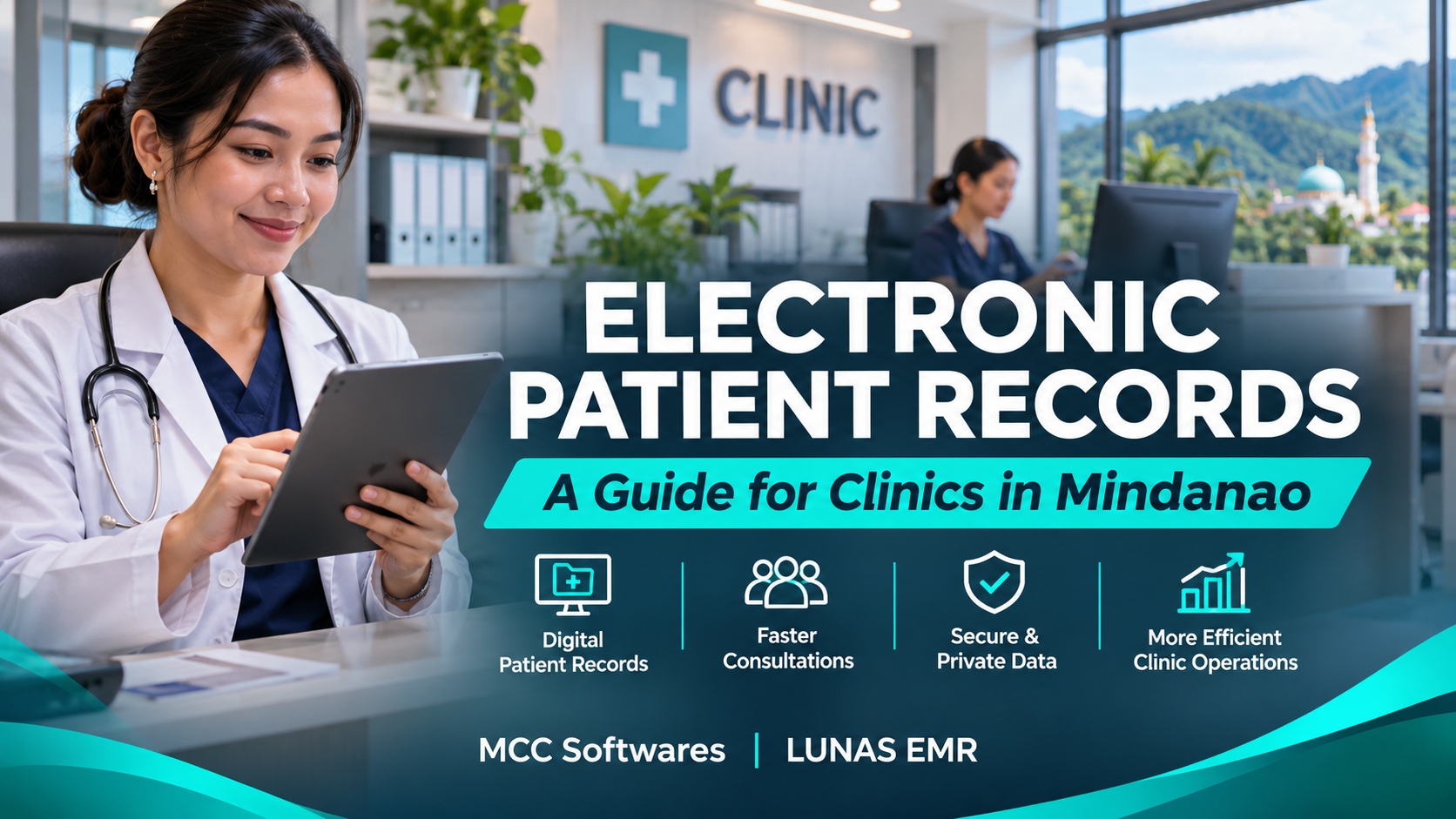
Electronic patient records are becoming a practical option for clinics in Mindanao that want to spend less time managing paperwork and more time attending to patients.
Think about a typical busy clinic morning. Patients are arriving, the secretary is looking for old folders, and the doctor needs to review someone's previous prescription. When records are stored on paper, even a simple follow-up consultation can take longer than expected.
For clinics in Cotabato City, Davao City, Cagayan de Oro, and other parts of Mindanao, switching to an electronic medical record (EMR) system can make these everyday tasks easier.
But is it really worth making the switch?
What Are Electronic Patient Records?
Electronic patient records are digital versions of the information clinics usually keep in paper charts.
Instead of storing everything in filing cabinets, clinics can organize patient histories, consultation notes, prescriptions, allergies, and laboratory results using an EMR system.
For example, when a returning patient visits the clinic, authorized staff can search for the existing record instead of manually locating a folder.
The physician can then review previous consultations before recording new findings.
It's a relatively simple change in how information is handled, but it can make a noticeable difference in daily clinic operations.
Why More Clinics Are Considering Digital Records
Paper records are familiar, and many clinics have used them successfully for years. However, they can become difficult to manage as patient numbers increase.
Less Time Searching for Patient Files
Imagine having hundreds of patient folders stored in cabinets. Finding the correct file takes time, especially when records have been misplaced or incorrectly filed.
An EMR allows authorized users to search for patient information digitally, helping reduce unnecessary delays.
Easier Follow-Up Consultations
Patients don't always remember the names of their previous medications or the details of their last consultation.
When a physician can review documented treatment history, it becomes easier to understand what happened during previous visits.
Electronic records don't replace medical judgment, but they can support more informed consultations.
More Organized Clinic Workflows
Patient registration, consultation notes, prescriptions, and billing are often handled separately.
A suitable EMR can bring these activities into a more organized workflow, reducing repeated encoding and helping staff coordinate tasks.
What Should Clinics Look for in an EMR?
Not every clinic needs an expensive or complicated system.
A small medical practice may only need patient registration, consultation records, prescriptions, and basic billing. A larger facility might require additional users, laboratory documentation, and reporting.
Before choosing software, consider these essential features:
Patient records: Easy registration and retrieval of patient information.
Consultation history: Organized notes from previous and current visits.
Prescription templates: Convenient preparation of medical documents.
Laboratory records: A place to attach and review laboratory results.
User permissions: Controlled access for physicians and clinic staff.
Billing: A clear way to manage consultation fees and payments.
Technical support: Assistance when staff encounter system problems.
It's also important to check whether the system works well on the devices already available in your clinic.
What About Patient Privacy?
Patient information is sensitive and must be handled carefully, whether it's stored on paper or digitally.
Under the Philippine Data Privacy Act of 2012, health information is classified as sensitive personal information.
Clinics must establish appropriate safeguards for collecting, storing, accessing, and processing these records.
For example, a receptionist may need to register patients, but that doesn't mean every employee should have unrestricted access to clinical information.
Before adopting an EMR, ask the provider about account security, access permissions, backups, and procedures for handling patient data.
A digital system can help enforce access controls, but software alone doesn't guarantee compliance with privacy laws.
Is an EMR Practical for Small Clinics in Mindanao?
Yes, provided the system matches the clinic's needs and resources.
One common concern is internet connectivity. Because many EMR platforms are cloud-based, clinic owners should understand what happens when their connection becomes unavailable.
Other considerations include subscription costs, staff training, and transferring existing paper records.
You don't necessarily need to digitize every old patient file immediately.
A more manageable approach is to start with new patients and gradually encode important information for returning patients.
This allows staff to become familiar with the system without disrupting the entire clinic.
Introducing LUNAS EMR by MCC Softwares
For clinics considering the transition, LUNAS EMR is an electronic medical record system developed by MCC Softwares, a Philippine software development company.
LUNAS EMR helps physicians and clinic staff manage patient information, consultation records, prescriptions, laboratory documents, and billing in one platform.
It also provides customizable physician charts, patient queues, medical document templates, and role-based access controls.
One useful feature is the ability to create and reuse clinical document templates, reducing the need to type the same information repeatedly.
The system works through a web browser on supported Windows, Android, and Apple devices.
For clinics that want to try the software before subscribing, LUNAS EMR offers a 14-day free trial with no credit card required.
Frequently Asked Questions
Can small clinics use electronic patient records?
Yes. Small clinics can benefit from digital records, particularly when managing returning patients, consultations, and prescriptions.
Are electronic records safer than paper files?
Both require appropriate protection. Electronic systems can provide access controls and backups, but clinics must also address cybersecurity and privacy risks.
Can doctors use LUNAS EMR on a tablet?
Yes. LUNAS EMR is browser-based and supports compatible tablets and other devices with an internet connection.
Final Thoughts
Moving from paper charts to electronic patient records doesn't have to happen overnight.
For clinics in Mindanao, the best approach is to choose a system that fits existing workflows, train staff properly, and introduce digital records gradually.
The goal isn't simply to eliminate paperwork. It's to make everyday clinic operations easier while keeping patient information properly organized and protected.
Want to see how electronic records could work in your clinic?
Explore LUNAS EMR and start your 14-day free trial — no credit card required.
Questions this article answers
- What are electronic patient records?
- What are the benefits of EMR systems for clinics in Mindanao?
- What is the difference between EMR and EHR?
- How can clinics protect electronic patient information?
- What features should an EMR system have?
- Do Philippine clinics need electronic medical records?
- How can a small clinic transition from paper charts?
- What should a clinic test before choosing EMR software?
Sources and references
- Republic Act No. 10173: Data Privacy Act of 2012 — Lawphil / Congress of the Philippines
- National Objectives for Health Philippines 2023–2028 — Department of Health
- Health Privacy Code — Department of Health
- Patient Safety — World Health Organization
- PH Core FHIR Implementation Guide (Draft) — Philippine Health FHIR Implementation Guide
Topics covered
Electronic Medical RecordsElectronic Health RecordsLUNAS EMRMCC SoftwaresDepartment of HealthNational Privacy CommissionData Privacy Act of 2012MindanaoCotabato CityDavao CityCagayan de OroGeneral Santos CityHL7 FHIRpatient data privacy
Related MCC products and services
Last reviewed for accuracy: 10 November 2026.
Related articles
-
How to Choose the Best EMR System for Your Clinic in the Philippines
Choosing an EMR starts with your clinic’s daily work. Use this practical guide to compare features, privacy safeguards, connectivity, costs, migration and support before committing.
-
Best EMR Software in the Philippines: 2026 Guide
Compare LUNAS EMR, SeriousMD and MYCURE for Philippine clinics. Learn what to check about records, consultations, offline access, costs, privacy and support before choosing an EMR.
-
LUNAS EMR: The Electronic Medical Record System Built for Every Clinic
Discover LUNAS EMR, a web-based medical record system by MCC Softwares. Features, pricing, and a 14-day free trial—no credit card required.